
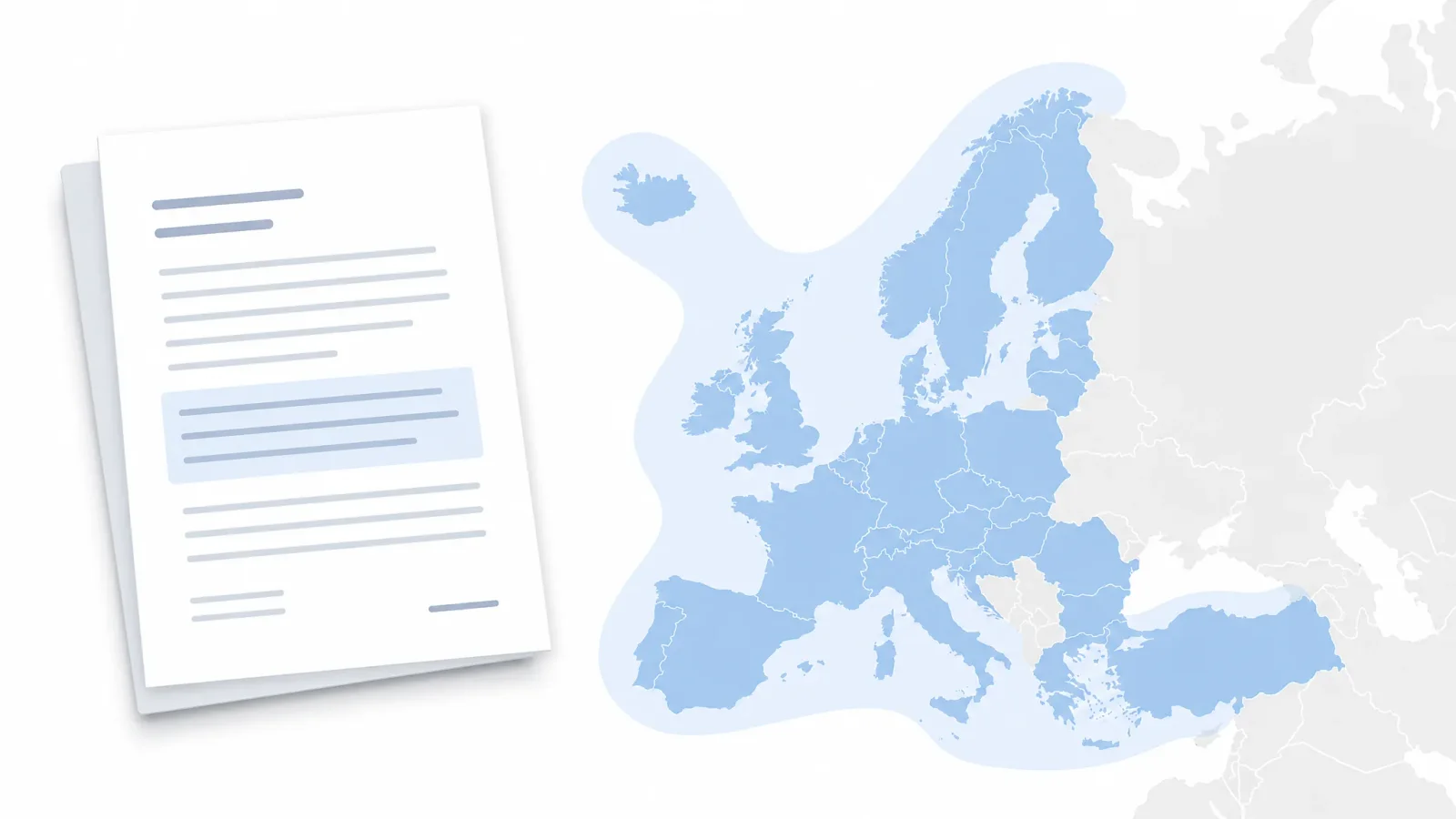
Google has published a tightly scoped notice about its site reputation policy, with an enforcement adjustment limited in the statement to the European Economic Area. The wording confirms that an approach has changed, but it does not say how that approach works in practice. For site owners and SEO practitioners, the useful task is to preserve that boundary rather than build a broader narrative around an announcement that supplies little operational detail.
What the official notice confirms
Google’s Search updates page lists an item titled “Updated the site reputation policy.” Google says it has adjusted its enforcement approach for the site reputation policy within the European Economic Area. The announcement directs readers to a blog post for additional information. Those points establish the subject and geographic scope of the notice, but they do not establish the mechanics behind the adjustment. The supplied update does not describe the specific enforcement changes, affected site types, implementation requirements, or expected search-performance effects. A careful reading therefore starts with the limited wording that Google has actually provided.
Where the statement stops
The supplied wording does not identify the particular enforcement mechanism that Google adjusted in the EEA. It does not name the site categories, publishing arrangements, or practices that could be relevant to the adjustment. It also does not provide implementation requirements, transition information, or a timetable for readers to follow. These gaps are not evidence that a particular outcome will occur; they are simply boundaries on what can be confirmed from this notice. Responsible commentary should distinguish an official policy statement from speculation and should not predict rankings where the supplied material does not do so.
Why this matters for SEO teams
For readers monitoring Search policy news, the practical value is disciplined record-keeping rather than assumed action. Record the confirmed EEA enforcement adjustment as a policy-development signal, while keeping its unknown operational details visible in the same note. Avoid translating a short announcement into assumptions about rankings, visibility, indexing, traffic, revenue, or other search outcomes. That approach helps separate a confirmed change in Google’s stated enforcement approach from conclusions that require details not present in the supplied material.
For related context on reading limited Google documentation carefully, see Google Clarifies Its Favicon Documentation. The linked blog post may contain further context, but the supplied update does not provide its contents. Until additional supplied material explains the adjustment, the announcement supports a narrow conclusion only. Google has said that its EEA enforcement approach for the site reputation policy has been adjusted. It has not supplied enough detail here to define the affected situations or the practical consequences. Keeping that distinction intact is more useful than filling the gaps with confident predictions.
Conclusion
Google’s notice confirms an adjustment to its site reputation policy enforcement approach within the EEA. The available statement does not explain how enforcement changed or what outcomes may follow. Readers should retain the confirmed scope, note the missing detail, and avoid extending the announcement beyond what the supplied wording supports.